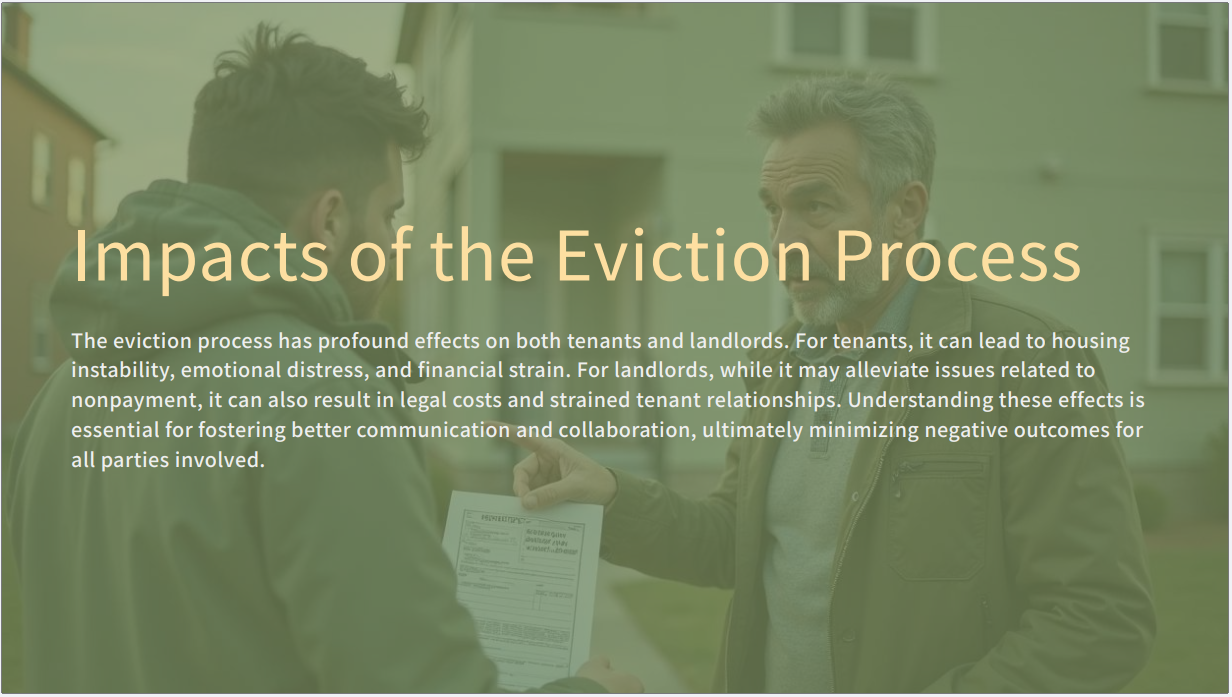
Overview of Eviction
Definition of Eviction
Eviction is a legal process through which a landlord removes a tenant from rental property, typically due to unpaid rent or lease violations. It involves court proceedings and can have lasting consequences for both parties.
Legal Framework
Each state has specific eviction laws, including notice requirements and court procedures. Both tenants and landlords should be familiar with these laws to navigate the eviction process effectively.
Common Causes of Eviction
Non-payment of rent, lease violations, and property damage are common reasons landlords initiate eviction. Understanding these causes can help tenants avoid eviction situations.
Effects on Tenants
Emotional Distress
Tenants facing eviction often experience anxiety, stress, and feelings of instability.
Financial Consequences
Eviction can lead to significant financial burden, including legal fees and moving costs.
Impact on Rental History
An eviction record can severely affect a tenant's ability to secure future housing.
Disruption of Stability
Eviction disrupts family stability and can lead to homelessness, particularly for vulnerable populations.
Effects on Landlords

Financial Loss
Evicted tenants can result in lost rental income, legal expenses, and costs associated with property damage and repairs.

Time and Resources
The eviction process can be time-consuming and requires landlords to navigate legal proceedings.

Relationship with Tenants
Evictions can sour relationships, leading to negative reputations within the community.

Legal Risks
Landlords not following proper procedures may face lawsuits from tenants.
Alternatives to Eviction
Negotiation and Mediation
Open communication can resolve issues.
Payment Plans
Landlords may offer payment plans to tenants.
Legal Assistance Programs
Communities offer legal aid for tenant rights.
Support Services
Local support services provide financial help.
Conclusion
Understanding the Process
Knowledge of the eviction process is essential for both tenants and landlords.
Promoting Communication
Open dialogue and proactive problem-solving can prevent eviction scenarios.
Future Considerations
Adaptation to new housing market challenges is vital for success.